 Apnea
ApneaHold your breath longer with a freediving training app built around your own max.
Apnea tests your maximum breath hold, builds personalised CO2 and O2 training tables around it, and coaches you through guided sessions on iPhone and Apple Watch. Ten minutes a day is enough to change what your lungs can do.


Free to download. No ads. Works offline. 4.8 stars on the App Store, 2,894 ratings.
What the app does
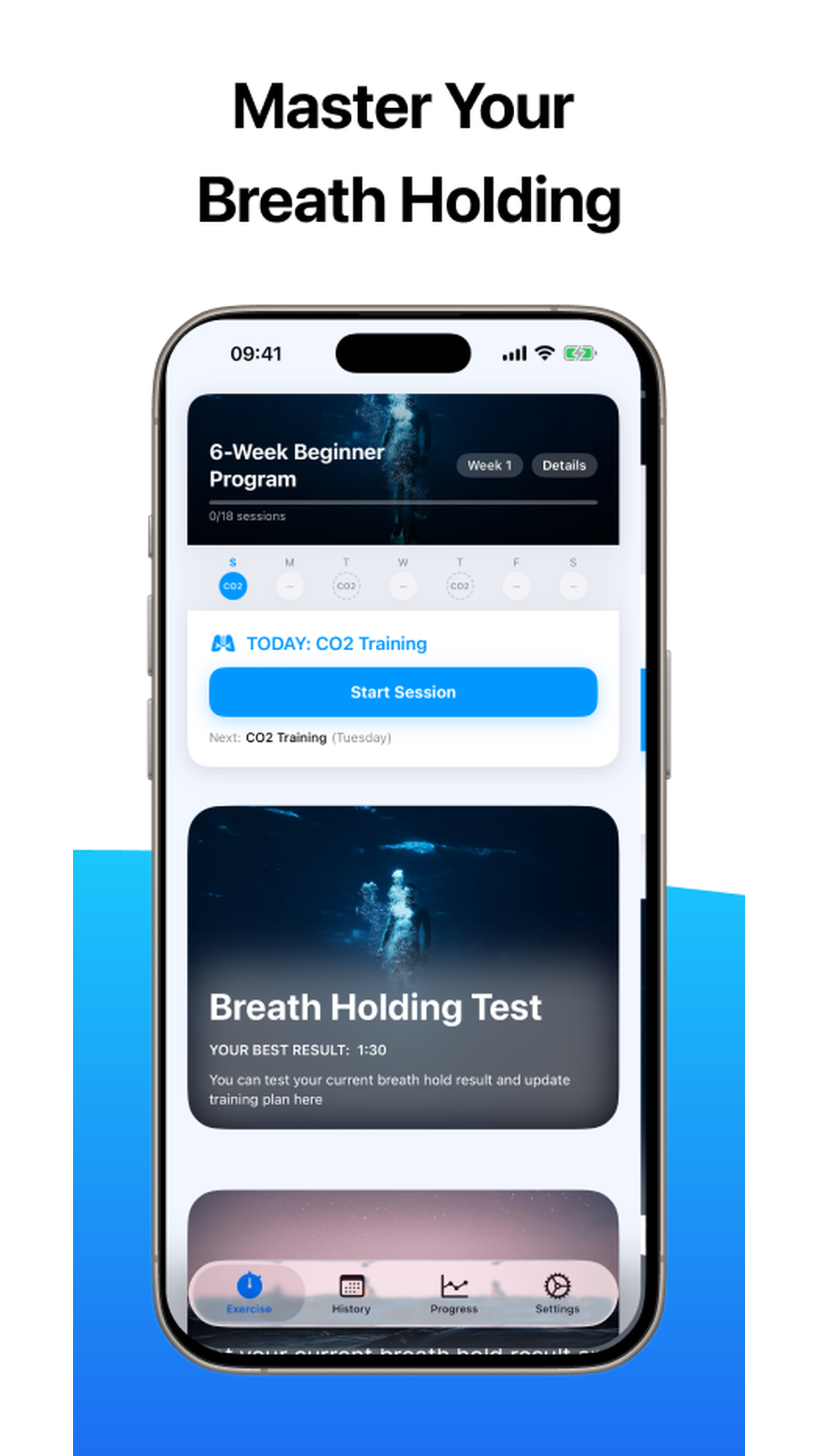
Everything is built around one number: your maximum breath hold. Test it, train against it, and watch it climb.
How training works
Test your max hold
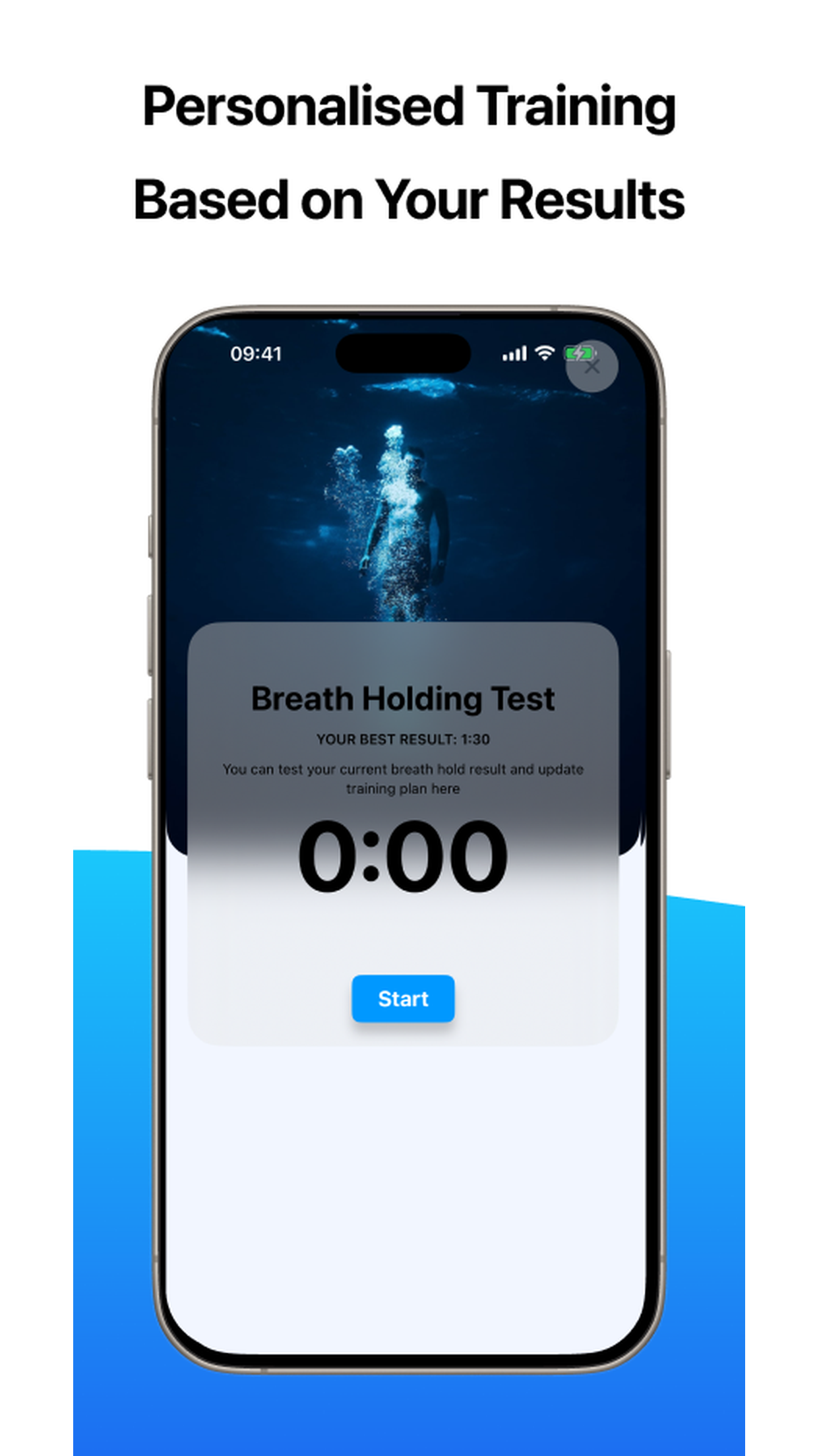
A guided breath hold test measures your current maximum. That single number becomes the baseline your whole training program is built from. Most beginners start between 30 and 90 seconds.
Get personalised tables
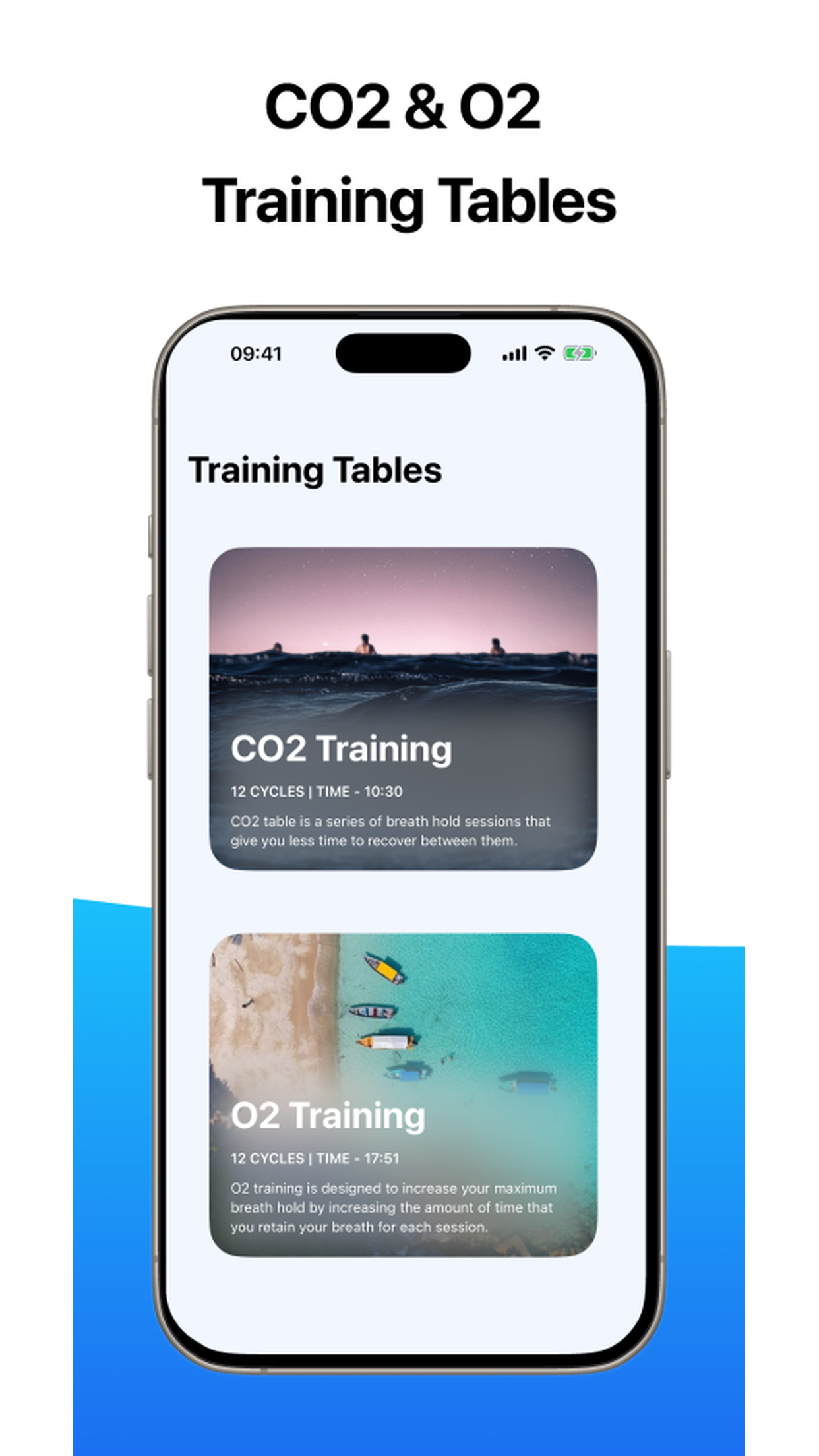
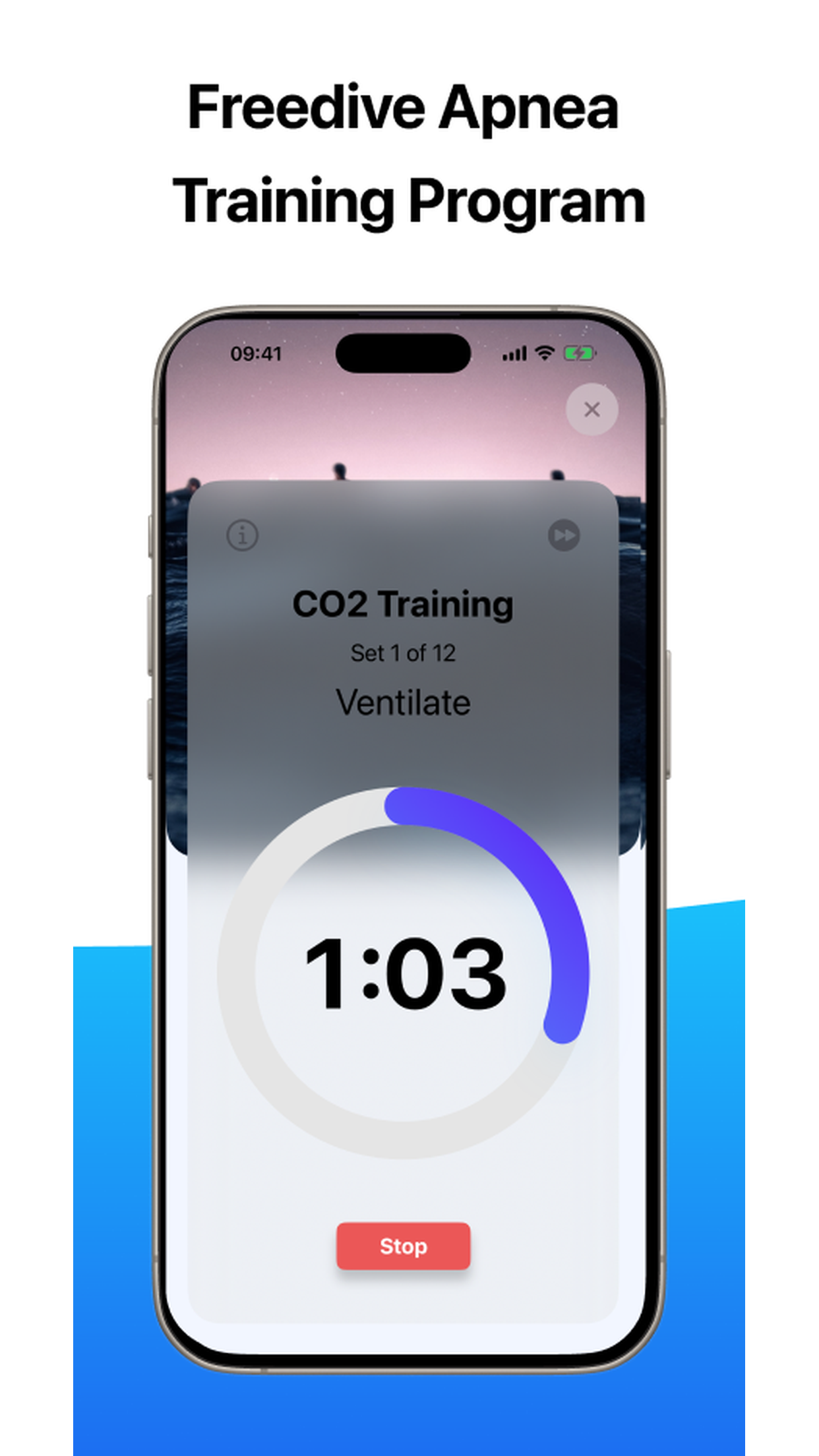
Apnea generates CO2 tolerance tables and O2 endurance tables scaled to your baseline. No spreadsheets and no guesswork: every hold and rest interval is calculated and timed for you, with audio coaching.
Follow the plan, watch it climb
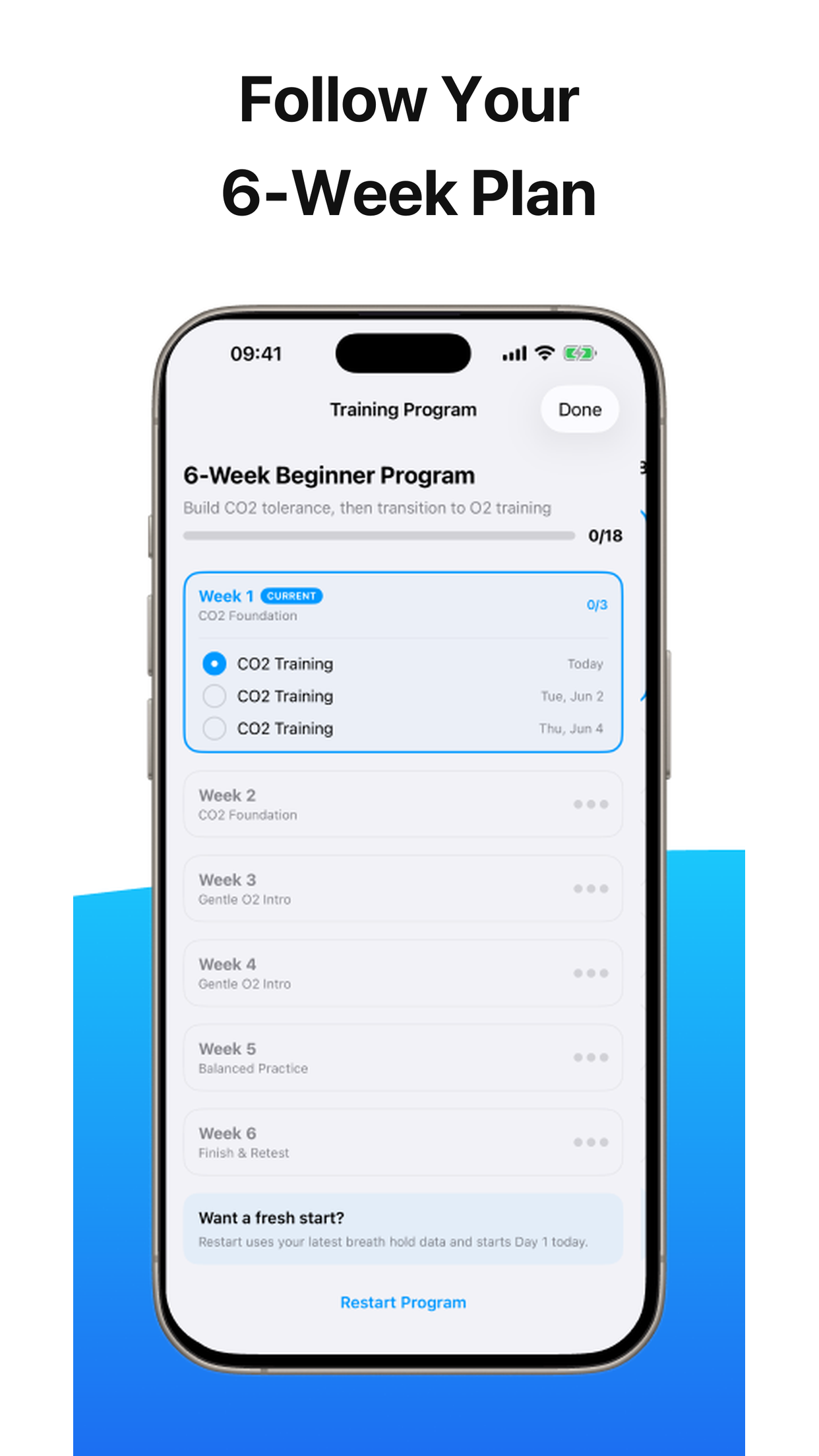
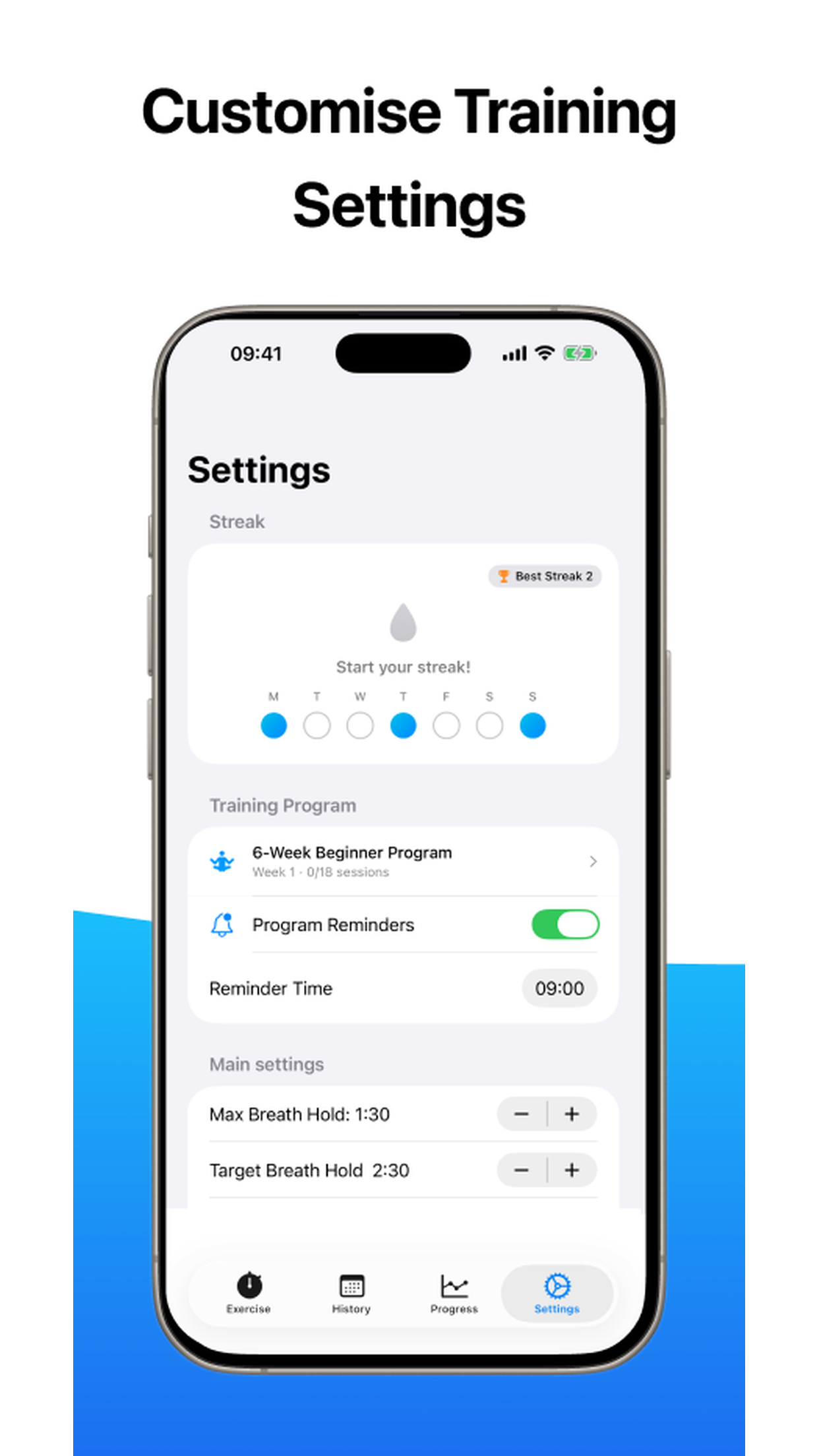
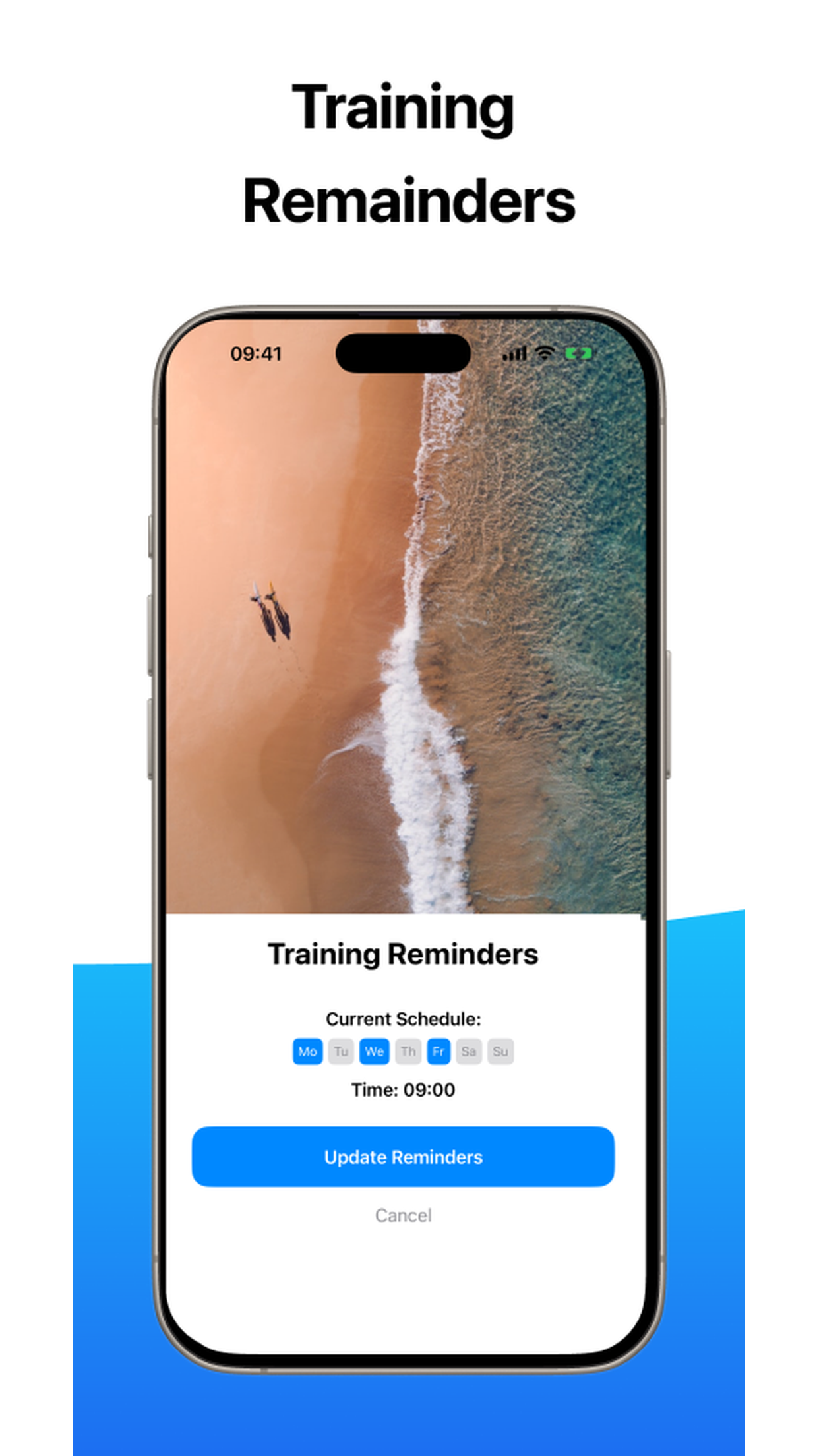
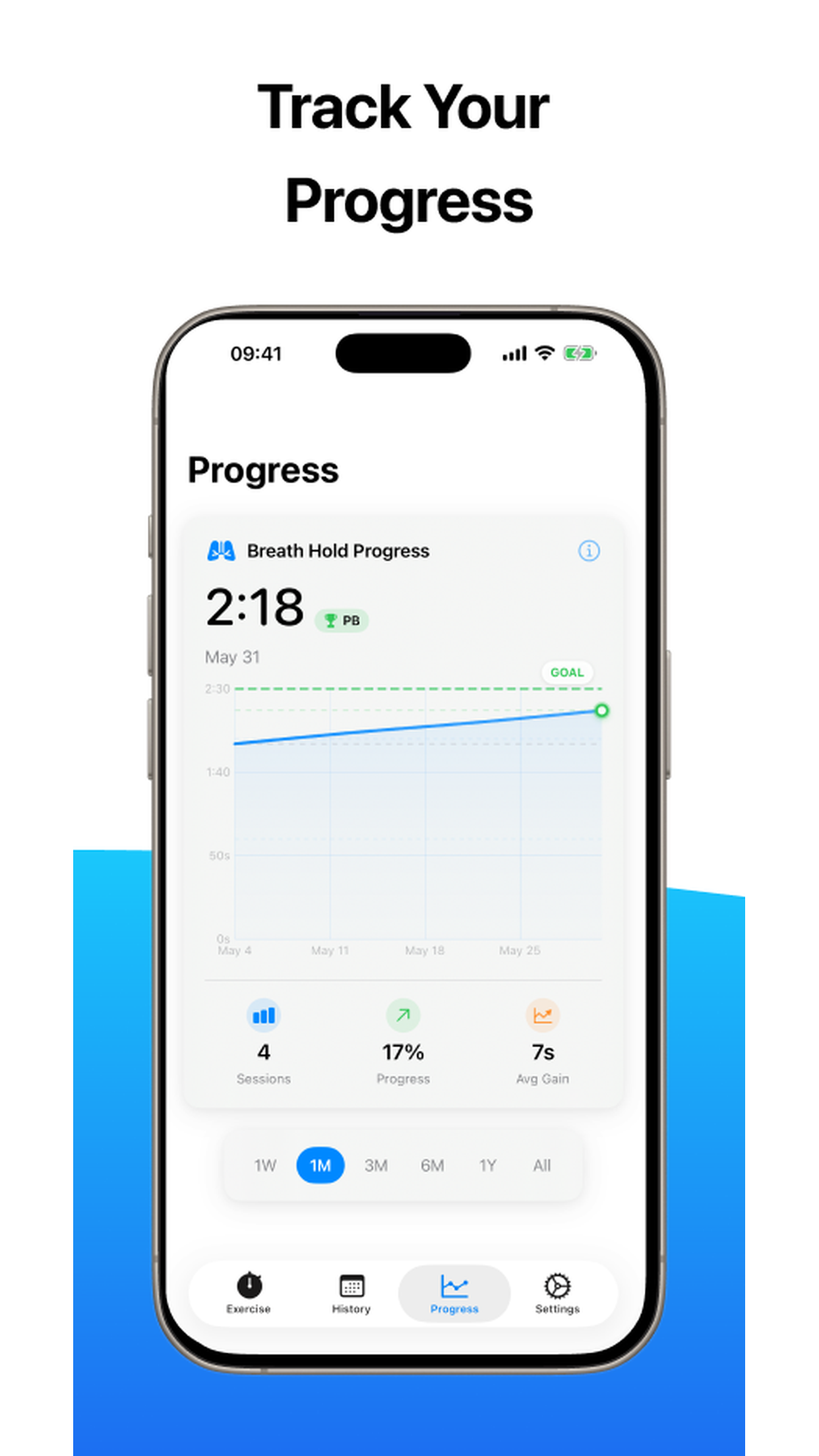
Train a few sessions a week on iPhone or Apple Watch. The guided plan progresses automatically, reminders keep you consistent, and your progress chart shows your max hold climbing week over week.
- Personalised CO2 and O2 training tables
- Guided multi-week training plan
- Native Apple Watch app with session sync
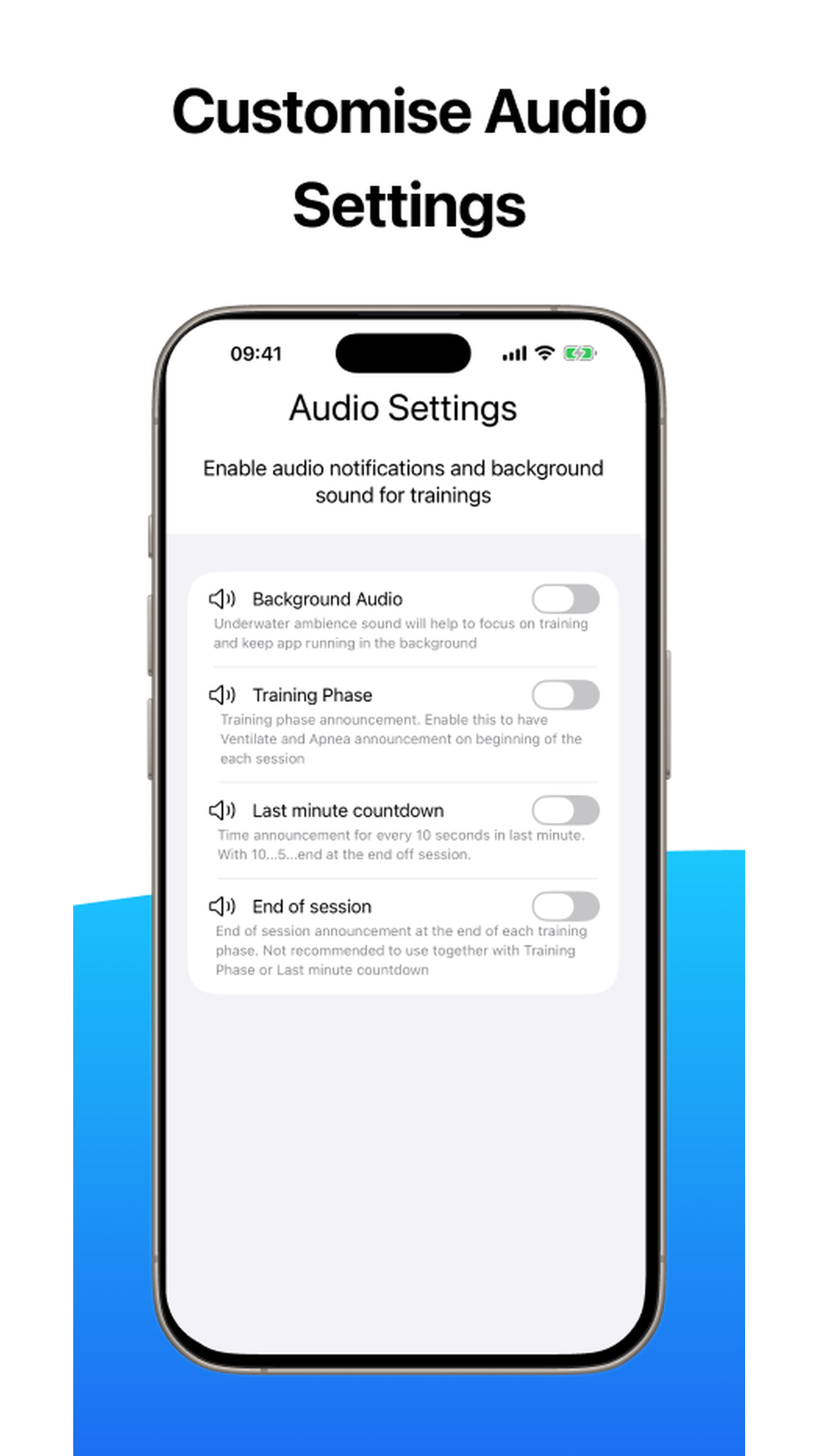
- Audio coaching you can customise or mute
- Progress charts and training history
- Smart reminders and weekly recaps
- Custom tables for advanced training
- Works fully offline, anywhere
- No ads, ever
What freedivers say
"It is really easy and effective. In one week my breath hold has gone from 60 seconds to 3 minutes. No ads, just clean, easy, uncluttered functionality."App Store review, "Great training app"
"I started off being able to hold my breath for 1:23. After one session of each type, CO2 and O2, I was able to hold my breath for 2:46. I literally doubled my time in under an hour."App Store review, "Amazing results"
"I took the initial test and started at 50 seconds, yet within 3 days of CO2 training I'd gone all the way to 2 minutes and 5 seconds."App Store review, marine biology and scuba student
Breath hold training guides
Free, practical guides written around the questions freedivers, spearfishers, and surfers actually search for, each one paired with the exact way to train it in the app.
How to Hold Your Breath Longer
The complete method: relaxation, the breathe-up, CO2 and O2 tables, and a weekly structure that takes most people past 2 minutes.
Read the guide FundamentalsHow Long Can You Hold Your Breath?
Average breath hold times by training level, what is genetics versus technique, and how to test your own max properly.
Read the guide Training tablesCO2 Tables for Freediving
What CO2 tolerance tables are, a worked example table, and how to run one hands-free with audio coaching.
Read the guide Training tablesO2 Tables for Freediving
How O2 endurance tables stretch your maximum hold, when to use them instead of CO2 tables, and a sample progression.
Read the guide DisciplineStatic Apnea Training
Technique, the phases of a long static hold, contractions, and a weekly static apnea training structure.
Read the guide BeginnersFreediving Training for Beginners
Your first four weeks of dry training: what to do, how often, the safety rules that are not optional, and what results to expect.
Read the guide SpearfishingBreath Hold Training for Spearfishing
How much breath hold you actually need, why CO2 tolerance beats a big max for repeated dives, and a spearo training week.
Read the guide SurfingBreath Hold Training for Surfing
Hold-down math, why panic burns your oxygen, and the CO2 training that makes a two wave hold-down survivable and calm.
Read the guidePricing
Apnea Freediving Exercises is free to download and start training with. Premium unlocks everything for $3.99 a month, $11.99 a year, or $44.99 once, forever, with Family Sharing included. Requires iOS 18 and works with Apple Watch (watchOS 10+); the Android version is on Google Play. Available in English, French, and German.
Questions
What is apnea training?
Apnea training is structured breath hold practice. Repeated, planned holds teach your body to stay calm as carbon dioxide rises and oxygen falls, which extends how long you can comfortably hold your breath for freediving, spearfishing, surfing, or swimming. Learn more
What are CO2 tables in freediving?
A CO2 table is a series of breath holds at a fixed length, usually around half your maximum, with rest periods that get shorter each round. Shrinking the rest lets carbon dioxide build up, training you to tolerate the urge to breathe. Learn more
What are O2 tables in freediving?
An O2 table keeps the rest period fixed while each breath hold gets progressively longer. The rising hold times train your body to keep working as oxygen levels drop, building toward a new maximum breath hold. Learn more
What is static apnea?
Static apnea is holding your breath while completely still, classically floating face down in a pool. It is an official freediving discipline and the purest measure of breath hold ability, and it is the foundation every other freediving discipline builds on. Learn more
How long can the average person hold their breath?
Most untrained adults can hold their breath for 30 to 90 seconds. With a few weeks of structured CO2 and O2 table training, 2 to 3 minutes is a realistic target. Elite freedivers exceed 10 minutes in competition static apnea. Learn more
How can I hold my breath longer?
Relax completely before the hold, breathe calmly rather than hyperventilating, and train consistently with CO2 and O2 tables a few times a week. Structured tables progressively raise your tolerance so your maximum hold keeps climbing. Learn more
Is breath hold training safe?
Dry breath hold training, done sitting or lying down on land, is low risk for healthy adults and is how the Apnea app is designed to be used. Never practice breath holds in water without a trained buddy, and consult a doctor if you have a heart or lung condition. Learn more
Does breath hold training help spearfishing?
Yes. A longer, calmer breath hold gives you more bottom time per dive, steadier aim, and safer ascents. CO2 tables are especially useful for spearfishing because repeated dives cause carbon dioxide to accumulate across a session. Learn more
Can surfers use apnea training?
Yes. Surfers train breath holds to stay relaxed during hold-downs after a wipeout. CO2 tolerance training simulates the spike of an unexpected hold, so a two wave hold-down becomes uncomfortable instead of terrifying. Learn more
Does the Apnea app work on Apple Watch?
Yes. Apnea Freediving Exercises includes a native Apple Watch app on watchOS 10 or later, so you can run training sessions from your wrist, and watch sessions sync back into your training history and weekly recaps. Learn more
Is the Apnea app free?
The app is free to download and start training with. Premium unlocks the full experience for $3.99 a month, $11.99 a year, or a $44.99 one-time lifetime purchase, and supports Family Sharing. Learn more
How quickly will I see results from apnea training?
Fast at first. App Store reviewers report going from 50 seconds to over 2 minutes within 3 days, and from 60 seconds to 3 minutes in one week. Early gains come from technique and CO2 tolerance; results vary and consistency decides long-term progress. Learn more
Start with a breath-hold test
Take the two minute breath hold test today. In a week, retest and see the difference for yourself. Free to download, no ads, works offline.